
Ridge Augmentation Manhattan | Restore Bone Width for Implant Placement
When the jawbone ridge has collapsed after tooth loss, augmentation rebuilds the shape and volume implants need.
100+
(5-star rating from our smiling customers.)

Experienced, Trusted Care
All-In-One Dental Services
Convenient & Accessible
ridge augmentation
What is a Ridge Augmentation ?
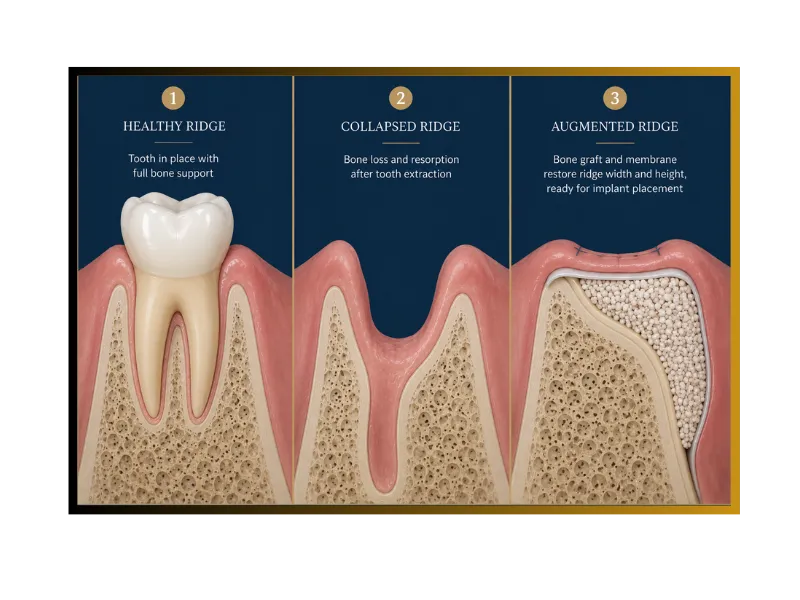
Ridge augmentation is a bone grafting procedure that rebuilds the height and width of the alveolar ridge, the section of jawbone that once held your tooth roots, after it has shrunk or collapsed following tooth loss.
When a tooth is lost and not replaced promptly, the surrounding bone begins to resorb. Over time the ridge narrows and flattens. Ridge augmentation restores it to the dimensions needed for proper implant positioning, long-term stability, and natural-looking results.
5,000+
iimplants placed
45+
YEARS OF EXPERIENCE
100+
countries represented
1K+
positive feedback
are you a CANDIDATE
Ridge augmentation may be the right first step if any of these apply to your case:
You have a narrow or sunken jaw ridge at a tooth loss site
You have been told your ridge is too thin for implants
You have been missing a tooth for several years without a replacement
You experienced bone loss from gum disease, trauma, or a failed restoration
You want implants that are correctly positioned for the best long-term outcome
What to Expect During Your ridge augmentation Treatment
step by step Procedure
A precise, personalized process designed for full arch restoration and lasting results

Assessment and Imaging
Cone beam CT imaging measures the existing ridge dimensions and identifies where bone volume is deficient. This tells us the exact amount and type of augmentation needed before implant placement can proceed.

Graft Placement
Bone graft material is placed at the deficient ridge site. A barrier membrane is typically used to guide new bone growth and protect the graft during healing. The area is then closed with sutures.

Healing and Bone Maturation
Over 3 to 6 months the graft integrates with existing bone and the ridge rebuilds to the required width and height. Follow-up imaging confirms the site is ready for the next phase.

Implant Placement
With the ridge restored, implant placement proceeds as planned. The result is an implant positioned correctly in three dimensions, supported by sufficient bone for long-term stability and natural aesthetics.
Benefits
BENEFITS of ridge augmentation
Unlocks Implant Placement
For patients with a collapsed or narrow ridge, augmentation makes properly positioned implants possible where they otherwise could not be placed.

Better Aesthetics at the Gumline
A rebuilt ridge creates natural gum contours around the final crown, so the result looks like a real tooth rather than an implant filling a gap.

Stops Further Bone Loss
Augmenting the ridge arrests the ongoing deterioration of the jawbone and restores structural support to the surrounding teeth and facial tissues.
Performed In House
Dr. Kramer, our board-certified periodontist, handles ridge augmentation in-house. Your full treatment is coordinated by one team in one office.
Benefits
Full Arch Restoration
All-on-6 replaces an entire arch of missing teeth with one fixed, comprehensive solution — upper, lower, or both.
Superior Stability
Six implants distribute bite force more evenly across the jaw than fewer-implant solutions — providing a more natural feel and greater long-term stability.
No Dentures Required
Your new arch is permanently fixed — no removal at night, no adhesives, no slipping, no dietary restrictions.
Long-Term Results
With proper care and regular checkups, dental implants are designed to be a long-term solution. Results vary by patient, and our team will give you an honest assessment of what to expect during your consultation.
How Much Does a Ridge Augmentation Cost in Manhattan?
Ridge augmentation in Manhattan typically ranges from $1,000 to $3,500 depending on the size of the defect and the amount of bone material needed. This cost is separate from implant placement and is usually scheduled as a preparatory step. CareCredit financing is available and our team will verify your insurance benefits before treatment begins.
$1,000–$3,500
Depending on defect size
0% Interest
Financing available via CareCredit
Free Consultation
Get your exact quote at no cost
TESTIMONIALS
Bringing Back That Perfect & Confident Smile

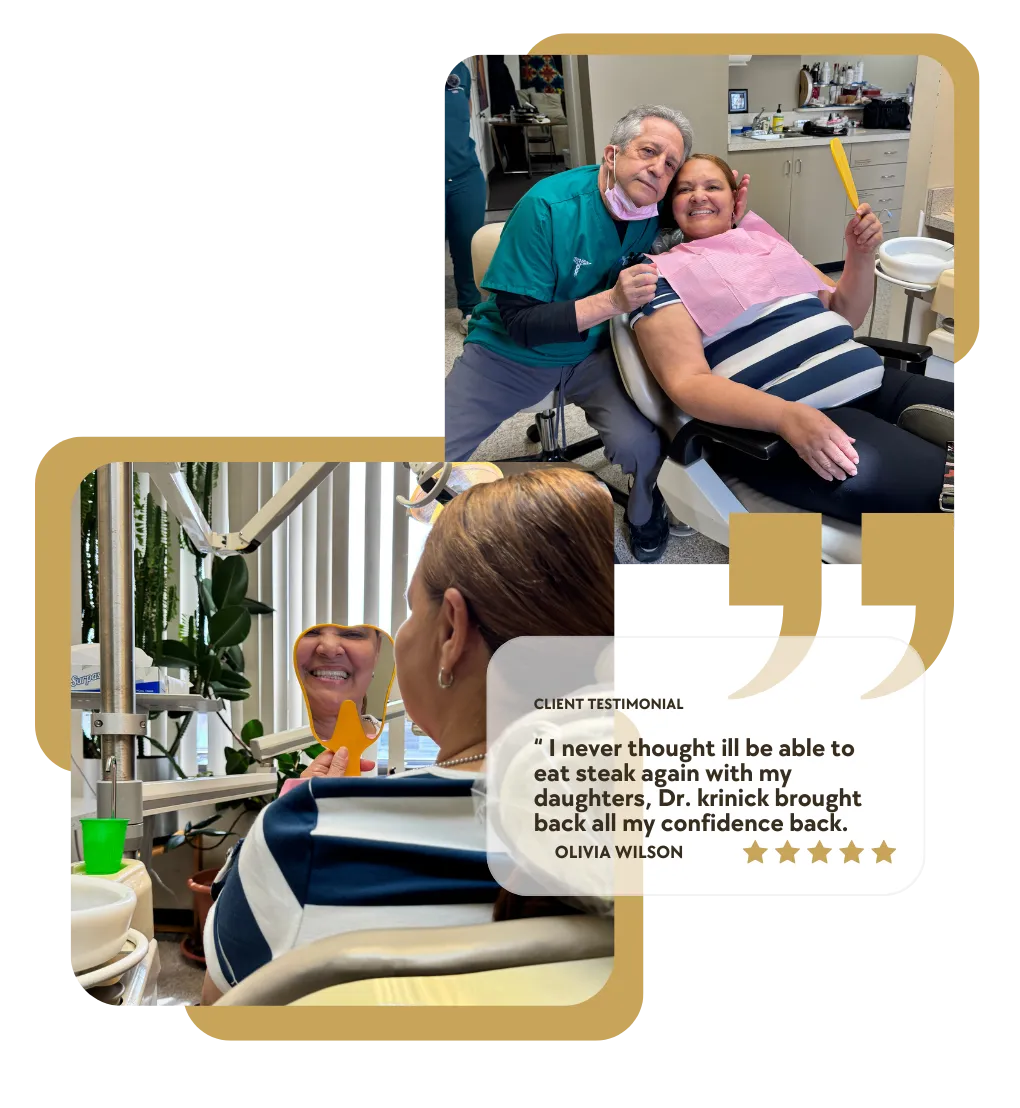
" Dr. Krinick transformed my smile with dental implants. I can eat and speak comfortably again!"
- Alvin J


"I’ve had several dental procedures over the years, but the care I received at UN dental was truly outstanding!"
- Patrick O
Accountant

"I was nervous about the procedure, but the team made me feel completely at ease. The results are incredible!"
- Deborah Witcher
Veneers in Manhattan, NY
Our Manhattan office is conveniently located at 919 2nd Ave #2, New York, NY 10017, offering advanced dental implant solutions tailored to your needs. Schedule your consultation today and experience world class care in the heart of the city.

Our Manhattan office is conveniently located at 919 2nd Ave #2, New York, NY 10017, offering advanced dental implant solutions tailored to your needs. Schedule your consultation today and experience world class care in the heart of the city.
Veneers in New Rochelle, NY
Located on Potter ave, our New Rochelle clinic combines modern technology with compassionate care to restore your smile. Call today to start your journey toward lasting confidence.

Located on Potter ave, our New Rochelle clinic combines modern technology with compassionate care to restore your smile. Call today to start your journey toward lasting confidence.
(212) 949-6105
Ready to experience the life-changing benefits of Veneers?
Schedule your free consultation today and take the first step toward a smile you’ll love.
Trusted by Manhattan for Over 45 Years
From diplomats to professionals, our patients consistently share 5-star experiences across Google and beyond.
Ridge Augmentation FAQs
Ridge augmentation is a type of bone grafting. The term specifically refers to rebuilding the alveolar ridge, the jawbone section that holds teeth, when it has lost width or height and needs to be reshaped before implants can be placed.
Most patients need 3 to 6 months for the graft to fully integrate before implant placement can proceed. The timeline depends on how much bone was added and where in the jaw the procedure was performed.
A temporary restoration can be placed over the site during the healing period so you are not left with a visible gap. Dr. Krinick will discuss your interim options during the consultation.
Not always. It depends on how much bone remains at the site. Cone beam CT imaging during the consultation will tell us definitively whether augmentation is needed or whether an implant can be placed directly.
My question is not listed!!. Ask anything you want?
Click to below links to contact us.
WE HELP TO
Bring A Confident Smile On You
We believe everyone deserves a smile they can be proud of.
Let us help you smile with pride!

CONTACT US
For the best treatment experience
Our friendly team is ready to assist you with scheduling an appointment or answering any questions about our services. Reach out today to experience the best in dental care and let us help you achieve your perfect smile!
For any queries
(212) 949-6105

Your Smile, Our Expertise!
919 2nd Ave #2, New York, NY 10017
47 Potter Ave, New Rochelle, NY 10801
© 2026 UN Dental Plaza • All rights reserved. • Strategix Automation