
Gum Disease Treatment Manhattan | Stop It Before It Gets Worse
From early gingivitis to advanced periodontitis, our periodontist treats every stage of gum disease in-house.
100+
(5-star rating from our smiling customers.)

Experienced, Trusted Care
All-In-One Dental Services
Convenient & Accessible
gum disease
What is Gum Disease
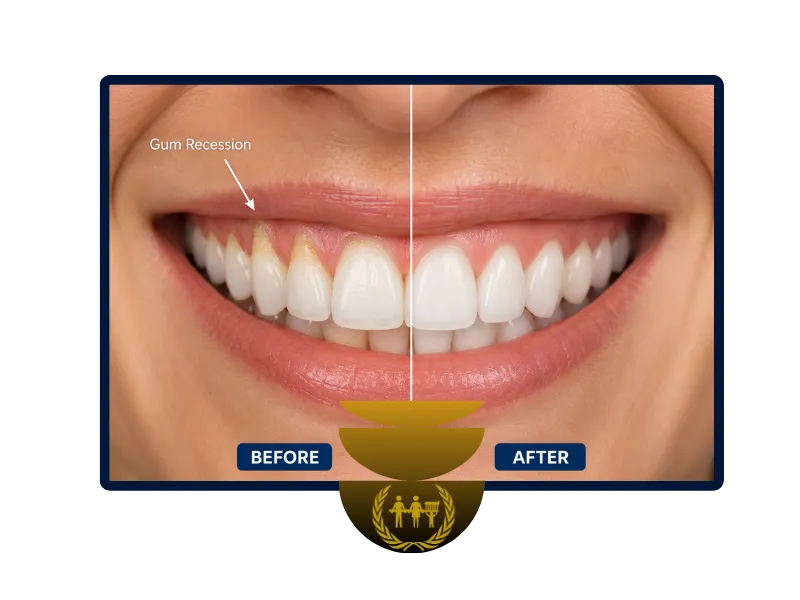
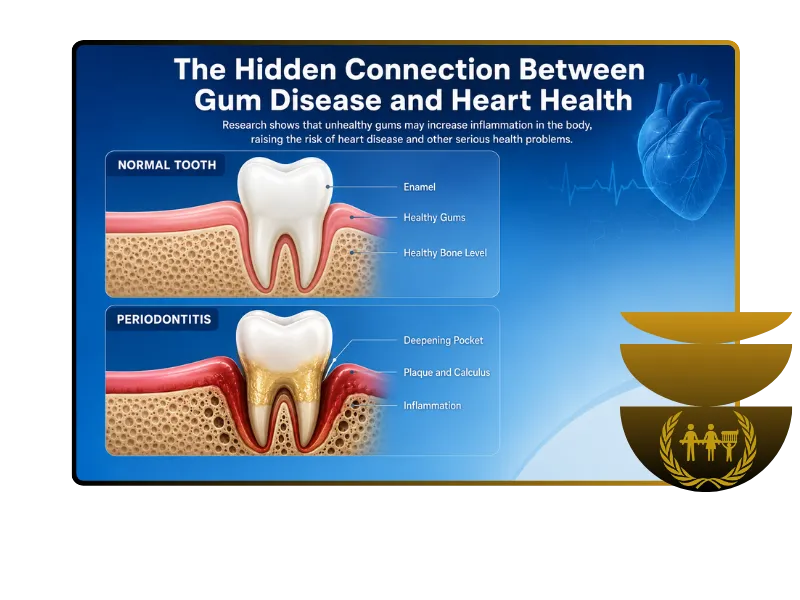
Gum disease is a bacterial infection of the gums and bone that support your teeth. It begins as gingivitis — red, swollen, bleeding gums — and progresses to periodontitis if left untreated, causing bone loss, gum recession, and eventually tooth loss.
The CDC estimates that nearly half of American adults over 30 have some form of gum disease. Most do not know it because it is typically painless in its early stages. A periodontal evaluation is the only way to know for certain where you stand.
5,000+
iimplants placed
45+
YEARS OF EXPERIENCE
100+
countries represented
1K+
positive feedback
are you a CANDIDATE
You may have gum disease and need treatment if any of the following apply:
Your gums bleed regularly when you brush or floss
Your gums are red, puffy, or tender to the touch
You have been told you have deep pockets around your teeth during a cleaning
You have persistent bad breath that does not resolve with brushing or mouthwash
Your teeth look longer or feel loose due to gum recession
what to expect during your gum disease treatment
step by step Procedure

Periodontal Evaluation
Dr. Rani performs a thorough examination including probing to measure pocket depths around each tooth, X-rays to assess bone levels, and a full review of your medical history. This determines the stage of disease and the right treatment approach.

Scaling and Root Planing
For most cases, treatment begins with a deep cleaning called scaling and root planing. Bacterial deposits are removed from below the gumline and root surfaces are smoothed to discourage bacteria from reattaching. This is completed under local anesthesia.

Reassessment and Adjunctive Therapy
After initial treatment we reassess pocket depths and tissue response. Antibiotic therapy may be used alongside deep cleaning for resistant bacterial pockets. Most patients see significant improvement at this stage without the need for surgery.

Maintenance and Monitoring
Gum disease is a chronic condition that requires ongoing management. Once treated, patients move to a periodontal maintenance schedule of every 3 to 4 months to prevent recurrence and monitor for any changes in gum health.
Benefits
BENEFITS of gum disease treatment

Preserve Your Natural Teeth
Periodontal disease is the leading cause of tooth loss in adults. Treating it early is the most effective way to keep your teeth for life.

Protect Your Overall Health
Treating gum disease reduces systemic inflammation linked to heart disease, stroke, and diabetes. Your gum health has a direct impact on your whole body.

Stop Bone Loss Early
Periodontal disease destroys the bone that holds your teeth in place. Early treatment halts that process and preserves the foundation your teeth depend on.

Treated In House
Dr. Rani handles all stages of gum disease treatment on site. If implants become part of your plan later, that transition happens in the same office.
Benefits
Full Arch Restoration
All-on-6 replaces an entire arch of missing teeth with one fixed, comprehensive solution — upper, lower, or both.
Superior Stability
Six implants distribute bite force more evenly across the jaw than fewer-implant solutions — providing a more natural feel and greater long-term stability.
No Dentures Required
Your new arch is permanently fixed — no removal at night, no adhesives, no slipping, no dietary restrictions.
Long-Term Results
With proper care and regular checkups, dental implants are designed to be a long-term solution. Results vary by patient, and our team will give you an honest assessment of what to expect during your consultation.
TESTIMONIALS
Bringing Back That Perfect & Confident Smile

" Dr. Krinick transformed my smile with dental implants. I can eat and speak comfortably again!"
- Alvin J


"I’ve had several dental procedures over the years, but the care I received at UN dental was truly outstanding!"
- Patrick O
Accountant

"I was nervous about the procedure, but the team made me feel completely at ease. The results are incredible!"
- Deborah Witcher
Trusted by Manhattan for Over 45 Years
From diplomats to professionals, our patients consistently share 5-star experiences across Google and beyond.
Gum Disease FAQs
Gingivitis, the earliest stage, is fully reversible with professional treatment and improved home care. Advanced periodontitis cannot be cured but can be effectively managed with treatment and consistent 3 to 4 month maintenance visits to prevent further progression.
Scaling and root planing is performed under local anesthesia so you should not feel pain during the procedure. Some tenderness and mild sensitivity in the days following is normal and typically resolves within a week.
Most non-surgical treatment is completed over two to four appointments, typically treating one or two quadrants at a time. After active treatment concludes, patients transition to a maintenance schedule that continues indefinitely to keep the disease from returning.
Yes. Active gum disease must be treated and stabilized before implants can be placed. Untreated periodontitis significantly increases the risk of implant failure. The advantage at UN Plaza is that gum treatment and implant care are handled by the same team.
My question is not listed!!. Ask anything you want?
Click to below links to contact us.

Explore Related Treatments
Every procedure is available in-house and planned as part of one cohesive treatment strategy, with no outside referrals.

Periodontal Maintenance
After gum disease treatment is complete, ongoing maintenance visits every 3 to 4 months are essential to prevent the disease from returning.

Gum Grafting
If gum disease has caused significant recession, gum grafting can rebuild the lost tissue after the disease is treated and stabilized.

Dental Implants
Patients who lose teeth to gum disease are often candidates for dental implants once the disease is controlled.
Visit Us in Midtown East
Conveniently located steps from Grand Central and the United Nations, with easy access from across Manhattan.

919 2nd Ave #2
New York, NY 10017
(212) 949-6105
Monday - Thurs 9am to 5pm
Friday 9am to 4pm
Sat-Sun Closed
Also Visiting Westchester?
Dr. Krinick also sees patients at Westchester Dental Implant Institute in New Rochelle, offering the same standard of implant care closer to home for our Westchester County patients
WE HELP TO
Bring A Confident Smile On You
We believe everyone deserves a smile they can be proud of.
Let us help you smile with pride!

CONTACT US
For the best treatment experience
Our friendly team is ready to assist you with scheduling an appointment or answering any questions about our services. Reach out today to experience the best in dental care and let us help you achieve your perfect smile!
For any queries
(212) 949-6105

Your Smile, Our Expertise!
919 2nd Ave #2, New York, NY 10017
47 Potter Ave, New Rochelle, NY 10801
© 2026 UN Dental Plaza • All rights reserved. • Strategix Automation